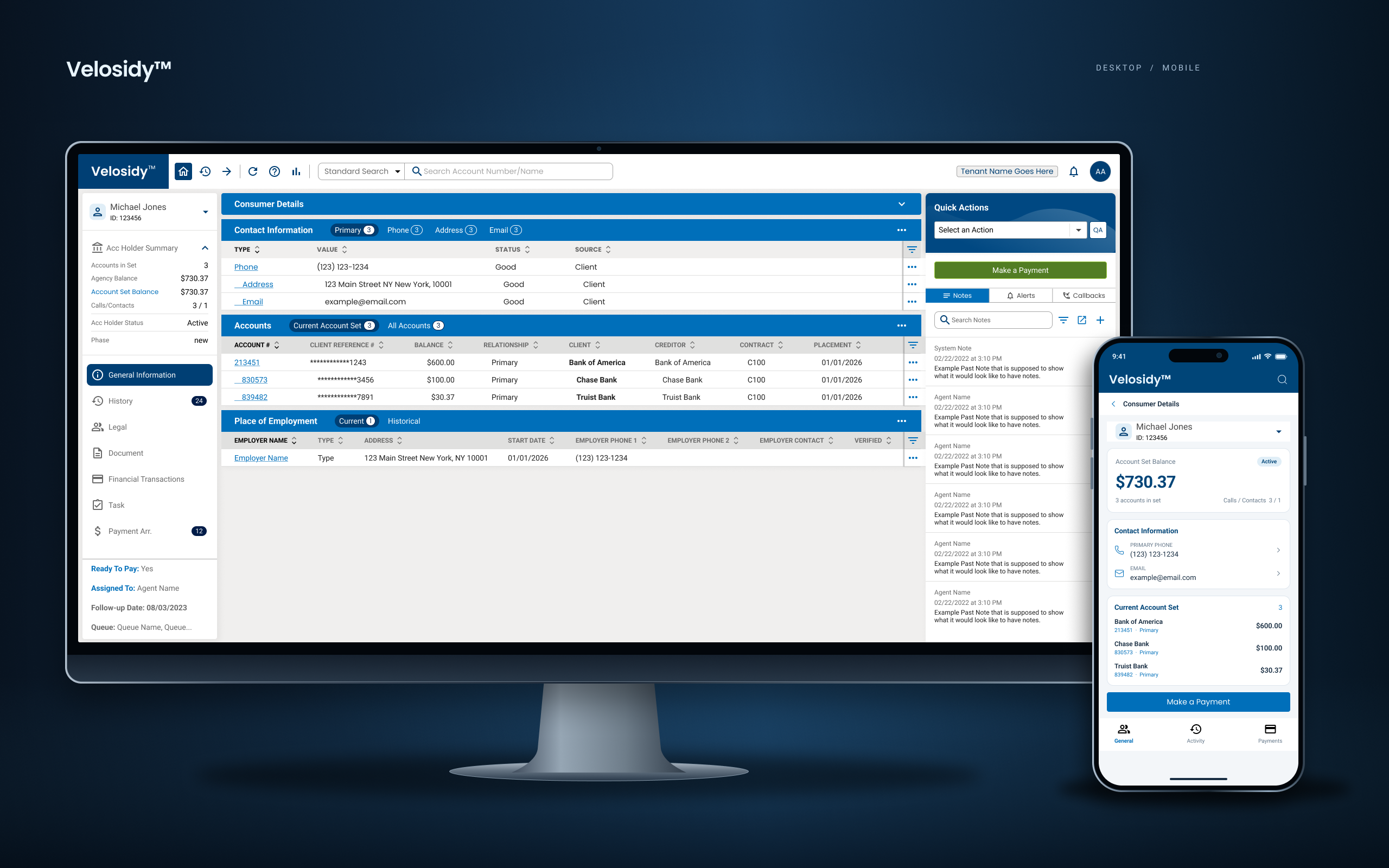
Building UX at Finvi from zero
Role: UX Manager, Feb 2022–present
Scope: Founded and lead the UX department supporting 8 engineering teams
Team: Hired 6 designers and 2 researchers
The starting point
When I joined Finvi in 2022, there was no UX function. Product managers sketched screens, engineers filled in the gaps, and research happened informally, if at all. Eight development teams needed designs. I had to figure out how to get it to them.
Building the team
I started with few designers and a UX researcher. We did not have enough designers to have dedicated coverage, so I ran meetings with PM's and built an integrated design/research roadmap. That roadmap is how designers got assigned and how we managed expectations. This started as slide deck, and turned into a custom built app.
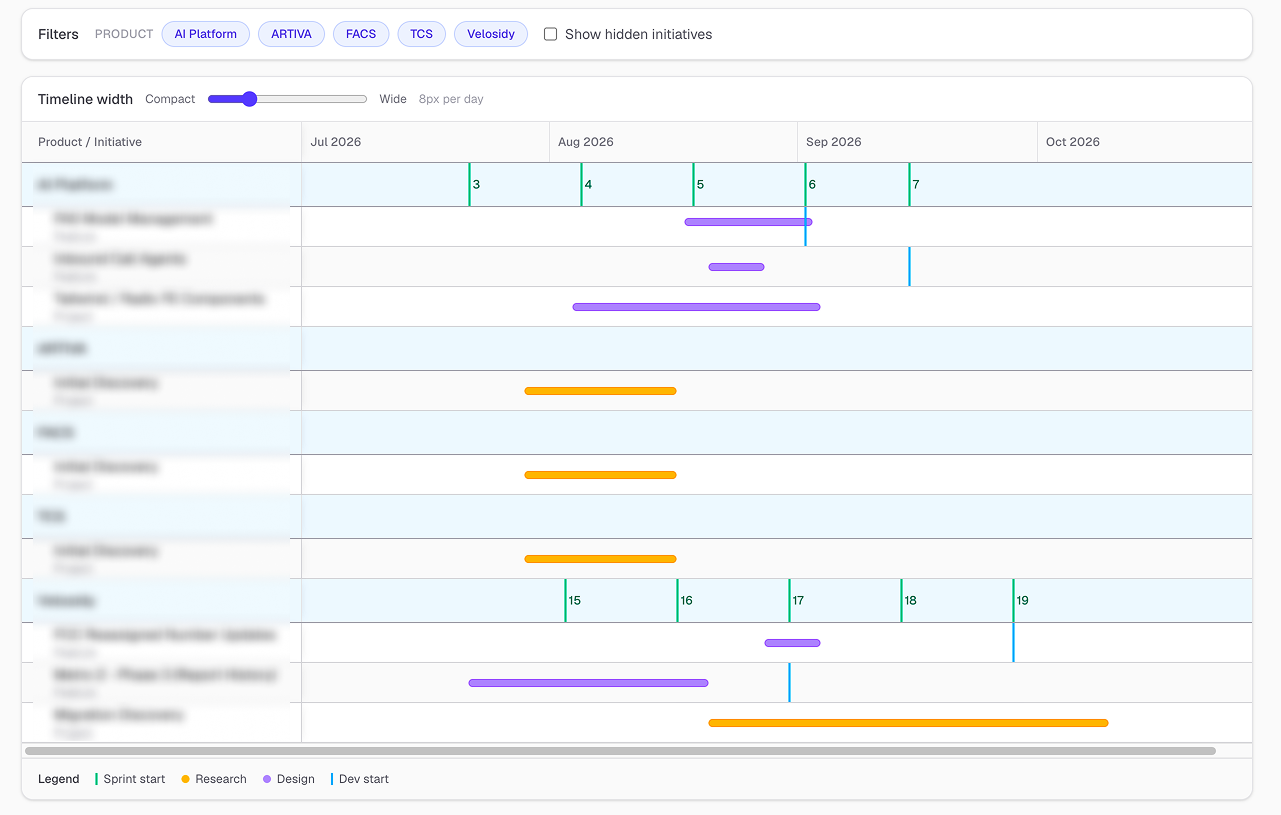
We had a small team, and a lot of work. Getting stuck was not an option. We met every day to unblock each other, work through hard design problems, and make sure everyone understood the user, the story and the business need behind each piece of work. My job was to clear obstacles, hold the bar on consistency, and keep the team close to users.
I built the foundation of our design system, and the team grew it into the shared standard it is today. Together we've delivered hundreds of stories and thousands of screens.
Building a research practice
Research at Finvi had been occasional. I wanted it to be routine. We partnered with Sales and Customer Success to reach customers. Now we run field studies, 1-on-1 interviews, and focus groups as a normal part of the work.
That effort created a group of customers who give regular feedback and look forward to doing it. We formalized it as a Client Advisory Board that meets every two weeks to work through the biggest issues and upcoming features. Over time, UX became the company's main product discovery arm. When product needs to figure something new out, they come to us.
Research findings
Listing out all the findings would take far too long, and you would not read it. But here are a few.
- Collection Agencies are slow to adopt new software. Some are on applications from the '90s. This means there are users with over 30 years of experience with one application. But it also means that the software is unintuitive for new employees. The main design struggle is reducing the adoption curve experienced employees, while still making it intuitive for new users.
- Data is key. Agencies have 1000's of datapoints, but it is not easily accessible and often they don't know how to make it useful. They surprisingly don't even always know if one of their clients is actually profitable for them. Standard reports, easy to build queries, and ways to enter predictable costs are all helpful tools for agencies to be more profitable.
- Finvi can be a walled garden. Since Velosidy is the system of record, Finvi can build on top of it with a near infinite number of features, including AI features. Agencies have an average of over 30 vendors that they work with. Each one represents a potential new feature in Velosidy. This would simplify the billing and management of the agencies different functions.
The outcome
Velsoidy launched with 5 early-adopter customers, and the results were clear:
- Training dropped from two weeks to half a day compared with legacy applications
- Agent performance rose by up to 40%
- AI is getting worked into Velosidy and other Finvi applications.
- UX now owns the design system, the Client Advisory Board and usability standards for new features
How I lead
I aim to be a servant leader. My job is to clear the path, set a high bar and help each person become a UX and product leader in their own right. I expect the team to understand the user better than anyone, the product nearly as well as the PMs, and the technology nearly as well as the developers.
I don't think you can be a good product person without not be a leader. It is my job to help bring that potential out of my team.